
Veneers Millersville MD
Looking for more cosmetic dentistry options? Visit our Cosmetic Dentistry in Millersville, MD page to explore teeth whitening, bonding, smile makeovers, and other aesthetic dental solutions.
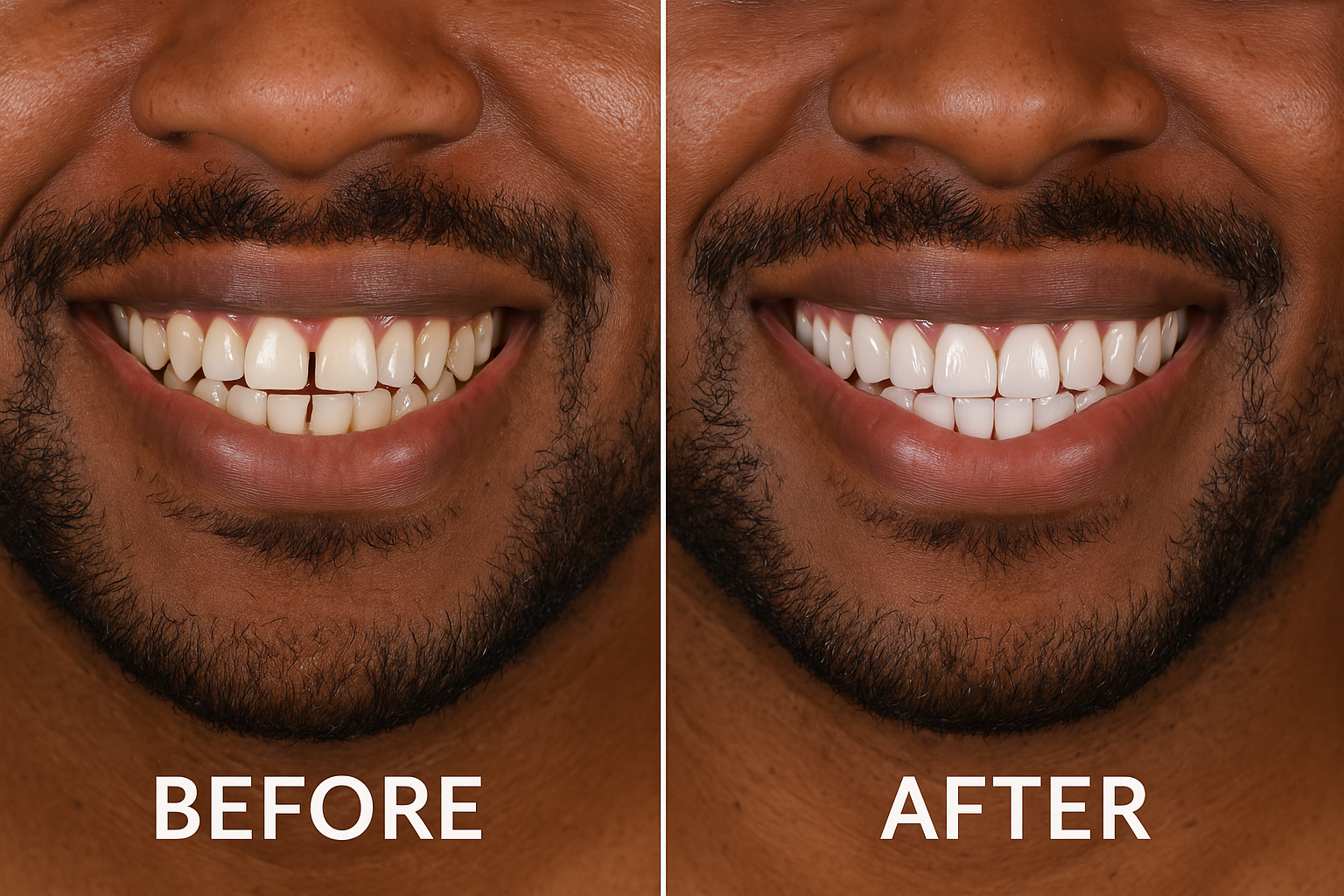
There’s a specific moment when someone decides they’re ready for veneers. It’s not usually dramatic – more like a quiet realization that they’ve been hiding their smile for too long. Maybe they cover their mouth when they laugh. Maybe they avoid photos. Maybe they’ve been told their whole life they have a “nice personality” but nobody ever mentions their smile.
Veneers aren’t just about vanity. Yes, they create beautiful smiles, but what they really do is remove the barrier between who you are and how you present yourself to the world. I’ve watched patients cry when they see their new smile for the first time – not because the veneers are perfect (though they are), but because they finally see themselves the way they always felt inside.
The transformation happens in two stages. The physical change takes a few weeks – consultation, preparation, temporary veneers, final placement. But the real transformation – the confidence, the willingness to smile freely, the change in how people carry themselves – that happens the moment they look in the mirror and see a smile they’re proud to show.
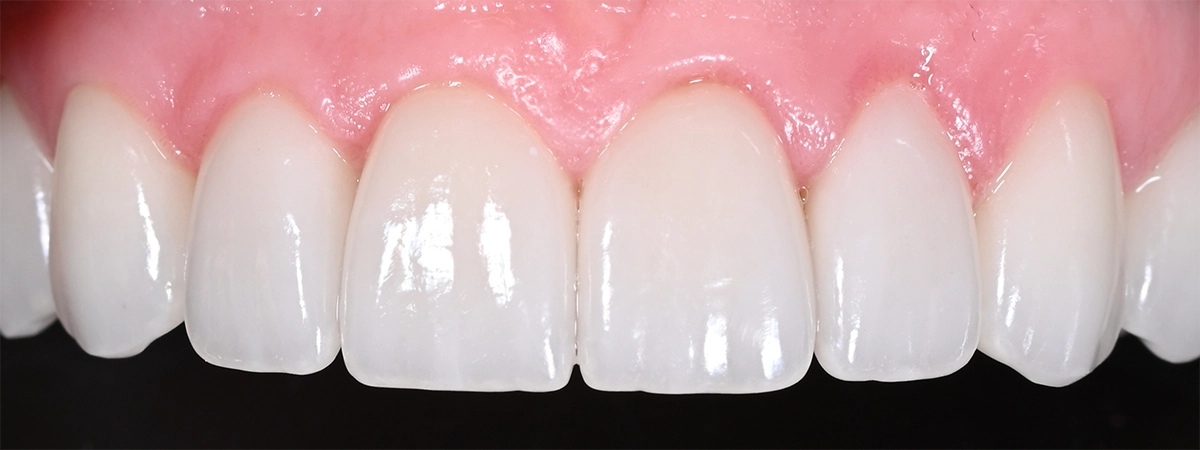
Why Patients Choose Veneers
Veneers solve multiple cosmetic issues simultaneously. That’s their superpower.
Severe discoloration – Some staining doesn’t respond to whitening. Tetracycline staining, fluorosis, internal tooth discoloration – these won’t budge with bleaching. Veneers cover the discoloration completely.
Chips and cracks – Teeth that are chipped, cracked, or worn down from grinding can be restored to their original shape and length with veneers.
Gaps between teeth – Diastemas can be closed with veneers without orthodontics. We make the veneers slightly wider than your natural teeth to fill the space.
Misshapen or uneven teeth – Teeth that are too small, oddly shaped, or uneven in length can be reshaped with veneers.
Minor alignment issues – Veneers can mask minor rotation or slight crowding. If one tooth sticks out slightly or leans inward, a veneer can create the illusion of proper alignment.
Complete smile makeover – Many patients want their entire smile redesigned. According to the American Academy of Cosmetic Dentistry, veneers are one of the most popular cosmetic dental procedures for comprehensive smile transformations.
What Are Dental Veneers?
Veneers are thin shells of porcelain or composite resin that bond permanently to the front surface of your teeth. Think of them as custom-made covers that completely transform how teeth look while maintaining natural tooth structure underneath.
Each veneer is fabricated specifically for one tooth based on precise measurements and color matching. The thickness varies but typically ranges from 0.5mm to 1mm – about as thin as a contact lens. Despite being incredibly thin, modern veneers are remarkably strong when bonded to tooth enamel.
Once bonded, the veneer becomes integrated with the tooth structure, creating a strong, durable restoration that looks and functions like a natural tooth.
Types of Veneers We Offer
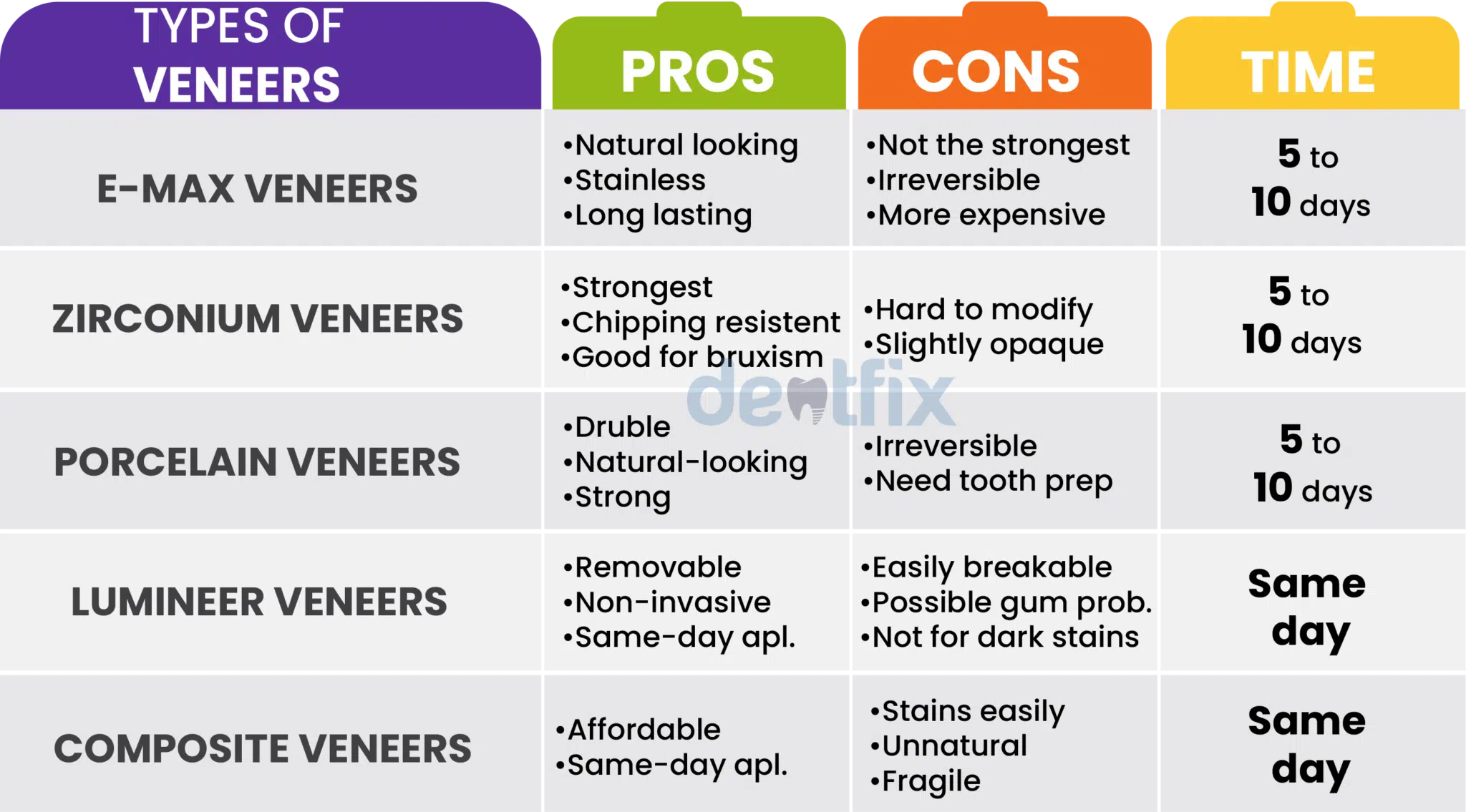
Porcelain Veneers – The gold standard. Crafted from high-quality ceramic that mimics natural tooth enamel. Most natural-looking, highly stain-resistant, lasts 10-20 years. Best for patients who want the most natural, longest-lasting results.
Composite Veneers – Made from tooth-colored resin material applied directly to teeth. Less expensive ($250-$1,500 vs $1,000-$2,500 per tooth), can often be completed same day. Shorter lifespan (5-7 years). Best for budget-conscious patients.
Lumineers (Ultra-Thin) – Ultra-thin porcelain veneers (about 0.3mm thick). Minimal to no tooth preparation required. Best for patients with healthy teeth needing minor cosmetic enhancement.
Prepless/Minimal Prep Veneers – Custom-designed veneers requiring minimal or no tooth preparation. Preserves natural tooth structure. Best for patients with healthy, well-positioned teeth.
Veneers Comparison
| Type | Material | Lifespan | Cost Per Tooth | Tooth Prep | Best For |
|---|---|---|---|---|---|
| Porcelain | Ceramic | 10-20 years | $1,000-$2,500 | Moderate | Most natural results, longevity |
| Composite | Resin | 5-7 years | $250-$1,500 | Minimal | Budget-friendly, younger patients |
| Lumineers | Ultra-thin ceramic | 10-15 years | $1,500-$3,000 | Minimal/none | Minimal invasion, minor changes |
| Prepless | Custom ceramic | 10-15 years | $1,200-$2,500 | Minimal/none | Conservative, healthy teeth |
The Veneer Process: What to Expect
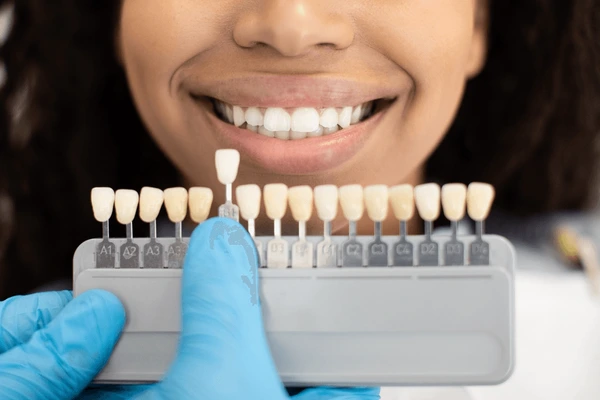
Consultation (60-90 minutes) – We examine your teeth and gums, discuss your smile goals, take photos and x-rays. We’ll show you examples of veneers we’ve done.
Preparation Appointment (2-3 hours for multiple veneers) – We remove a thin layer of enamel (0.5-1mm) from the front of teeth. We take impressions or digital scans. These go to our dental lab (2-3 weeks). You’ll wear temporary veneers during this time.
Final Placement (2-3 hours) – We try on your custom veneers without bonding to check fit, shape, and color. Once you approve, we permanently bond each veneer using special adhesive.
Total Timeline: 3-4 weeks from consultation to final placement. 3 appointments total.
Research published in Clinical, Cosmetic and Investigational Dentistry shows that modern porcelain veneers have survival rates of 96-98% over 5 years when properly placed and maintained.
What Veneers Can Fix (And What They Can’t)
Veneers CAN fix: Stained or discolored teeth, chipped/cracked teeth, gaps between teeth, slightly crooked teeth, teeth that are too small, worn down teeth, uneven tooth lengths, minor bite issues affecting appearance.
Veneers CANNOT fix: Severe misalignment (need orthodontics), significant bite problems, broken teeth with insufficient structure (need crowns), severely decayed teeth, gum disease, grinding habit without nightguard protection.
Life with Veneers: Care and Maintenance
Daily care: Brush twice daily with non-abrasive toothpaste, floss daily, use mouthwash if desired, avoid using teeth as tools.
What you can eat: Pretty much everything. You can bite apples, eat corn on the cob. Avoid biting directly into super hard foods (hard candy, ice, bone) with front teeth.
What you can drink: Coffee, tea, red wine won’t stain porcelain veneers. Composite veneers are more susceptible to staining but still resistant.
Lifespan: Porcelain veneers: 10-20 years. Composite veneers: 5-7 years. Factors: oral hygiene, grinding habits, diet, dental care.
Nightguard: If you grind or clench, you NEED a nightguard to protect veneers.
Cost Considerations for Veneers
Per-tooth pricing:
• Porcelain veneers: $1,000-$2,500 per tooth
* Composite veneers: $250-$1,500 per tooth
* Lumineers: $1,500-$3,000 per tooth
* Prepless veneers: $1,200-$2,500 per tooth
Full smile makeover (8-10 teeth): Porcelain: $8,000-$25,000 | Composite: $2,000-$15,000
Insurance coverage: Typically considered cosmetic and not covered.
Payment options: Monthly payment plans, CareCredit, FSA/HSA accounts.
According to the American Dental Association, veneers are a proven cosmetic treatment when performed by qualified dentists.
Veneers vs Other Cosmetic Options
| Treatment | Best For | Cost | Lifespan |
|---|---|---|---|
| Veneers | Comprehensive smile makeover | $1,000-$2,500/tooth | 10-20 years |
| Teeth Whitening | Discoloration only | $300-$800 | 6-24 months |
| Bonding | Small chips, minor gaps | $200-$600/tooth | 3-7 years |
| Crowns | Severely damaged teeth | $1,000-$3,000/tooth | 10-15 years |
Why Choose Smile Rx for Veneers
We’ve transformed smiles for patients from Millersville, Odenton, Crofton, Pasadena, Annapolis, Gambrills, Crownsville, Glen Burnie, and Severna Park.
Comprehensive smile analysis – We analyze your entire smile to design veneers that look naturally beautiful on YOU.
Custom shade matching – We take time to match veneer color perfectly.
High-quality materials – Premium porcelain from top dental labs.
Experienced cosmetic dentistry – Dr. Khan has extensive training in aesthetic dentistry.
Trial smile preview – For full smile makeovers, we create temporary veneers first.
Are You a Good Candidate?
Adults with healthy teeth and gums, cosmetic concerns, non-smokers or willing to quit, good oral hygiene, realistic expectations.
Ready for Your Dream Smile?
If you’ve been hiding your smile or feeling self-conscious about how your teeth look, veneers might be the solution.
We serve patients throughout Anne Arundel County – Millersville, Odenton, Crofton, Pasadena, Annapolis, Gambrills, Crownsville, Glen Burnie, and Severna Park.
Start with a free consultation. We’ll examine your teeth, discuss your goals, show you examples of our work, and explain exactly what veneers can do for you.
Looking for more cosmetic dentistry options? Visit our Cosmetic Dentistry in Millersville, MD page to explore teeth whitening, bonding, smile makeovers, and other aesthetic dental solutions.
Frequently Asked Questions About Veneers
What do veneers typically cost in Maryland?
In Maryland, porcelain veneers generally cost $1,000-$2,500 per tooth, while composite veneers run $250-$1,500 per tooth. The exact price depends on the dentist’s experience, location within Maryland, and the complexity of your case. A full smile makeover involving 8-10 teeth typically ranges from $8,000-$25,000 for porcelain veneers. These prices are comparable to national averages. Most practices offer financing options since veneers are considered cosmetic and rarely covered by insurance.
How much should I expect to pay for a complete set of veneers?
A full set of veneers covering all visible teeth (typically 8-10 upper teeth, sometimes 8-10 lower teeth too) costs $8,000-$25,000 for porcelain veneers or $2,000-$15,000 for composite veneers. The wide range reflects different factors: material quality, dentist expertise, geographic location, and how many teeth you’re covering. Many patients do 6-8 upper front teeth for $6,000-$20,000. Get detailed quotes from multiple dentists and ask exactly what’s included.
What's the cost for a single tooth veneer?
One veneer typically costs $1,000-$2,500 for porcelain or $250-$1,500 for composite resin. Single veneers are slightly more expensive per tooth than when doing multiple veneers because there’s no volume discount. The challenge with one veneer is matching it perfectly to surrounding natural teeth – color matching is critical. If the one tooth is significantly darker or different than adjacent teeth, you might need to whiten surrounding teeth first.
Why do some dentists advise against veneers?
Dentists might recommend against veneers if: your teeth are healthy and don’t need alteration, you have active decay or gum disease, you grind your teeth severely and won’t wear a nightguard, you have unrealistic expectations, less invasive options would work better (like whitening or bonding), you can’t afford proper maintenance, or significant orthodontic issues need addressing first. Some dentists are simply not trained in cosmetic dentistry and prefer to refer these cases out.
What's a more affordable alternative to porcelain veneers?
Composite veneers cost $250-$1,500 per tooth versus $1,000-$2,500 for porcelain. Other budget-friendly options: dental bonding ($200-$600 per tooth) for minor chips or gaps; professional teeth whitening ($300-$800) if discoloration is your only concern; or orthodontic treatment if alignment is the issue. Some dentists offer combination smile makeovers using porcelain veneers on the most visible front teeth and composite on side teeth to reduce costs. Keep in mind cheaper options typically don’t last as long.
How long do veneers typically last?
Porcelain veneers last 10-20 years on average, while composite veneers last 5-7 years. Lifespan depends heavily on: your oral hygiene habits, whether you grind or clench your teeth, your diet and lifestyle, whether you wear a nightguard if needed, and how well they were placed initially. Some patients have veneers lasting 25+ years with excellent care. When veneers fail, they typically need replacement rather than repair.
Can teeth decay underneath veneers?
Yes, the tooth underneath a veneer can still develop cavities if bacteria get under the veneer edges or if oral hygiene is poor. The veneer covers the front but doesn’t protect the back, sides, or gum line from decay. This is why daily brushing, flossing, and regular dental checkups are critical. If decay develops, the veneer must be removed to treat the cavity, then a new veneer fabricated. Good bonding technique and maintaining healthy gums help prevent bacteria from getting under veneers.
What would disqualify me from getting veneers?
You’re not a good candidate if: you have active untreated tooth decay or gum disease, severe misalignment or bite problems that need orthodontics first, severely worn teeth with insufficient enamel, bruxism (grinding) and refuse to wear a nightguard, you’re a child or young teen with teeth still developing, unrealistic expectations about the outcome, or can’t commit to proper oral hygiene. These aren’t permanent disqualifications – many can be addressed first before getting veneers.
Do people commonly regret getting veneers?
Most patients love their veneers, but some do experience regret, usually because: they chose a color too white that looks fake, they didn’t understand veneers are permanent, they developed sensitivity they weren’t prepared for, the shape or size doesn’t look natural, they couldn’t afford proper maintenance and veneers failed early, or they chose an inexperienced dentist. The key to avoiding regret: choose an experienced cosmetic dentist, communicate clearly about your goals, and choose natural-looking color and shape.
What foods should I avoid with veneers?
You can eat almost everything with veneers, but use common sense. Avoid biting directly into extremely hard foods: hard candies, ice cubes, bones, nutshells, popcorn kernels. Don’t use teeth as tools. Sticky candies like caramels can potentially pull veneers off. Very dark foods won’t stain porcelain veneers but can stain composite. You CAN eat apples, corn on the cob, crusty bread – just bite carefully. Coffee, tea, and red wine won’t harm porcelain veneers.
Can I bite into an apple with veneers?
Yes, you can bite apples with veneers, but be reasonable about it. Porcelain veneers are strong and designed to withstand normal chewing forces. Cut very hard or large apples into smaller pieces rather than biting directly into a whole apple with significant force. The concern isn’t that veneers are fragile, but that excessive force on the edge of a veneer can cause chipping over time. Most patients eat apples, carrots, and similar foods without issues.
Can I drink coffee with veneers?
Yes, coffee won’t harm porcelain veneers – they’re highly stain-resistant and won’t discolor from coffee, tea, or red wine the way natural teeth do. Composite veneers are more susceptible to staining from coffee but still more resistant than natural teeth. Drink normally and maintain good oral hygiene. The porcelain surface is non-porous and doesn’t absorb stains. However, the edges where the veneer meets natural tooth can accumulate stains over time if oral hygiene is poor.
What are alternatives to veneers for smile improvement?
Alternatives depend on your specific concerns. For discoloration only: professional teeth whitening ($300-$800). For small chips or gaps: dental bonding ($200-$600 per tooth). For misalignment: orthodontics with braces or clear aligners ($3,000-$8,000). For severely damaged teeth: dental crowns ($1,000-$3,000 per tooth). For minor reshaping: tooth contouring ($50-$300 per tooth). Many patients combine treatments – orthodontics first, then whitening, then bonding. A cosmetic consultation can help determine which option(s) best address your concerns.
Ready to Transform Your Smile with Veneers?
See examples of our work, discuss your goals, and get exact costs with no pressure or obligation.